The jury is still out on whether co-founders influence start-up success, but the benefits from forming strategic partnerships are clear. Whenever things become difficult – or even overwhelming – as an entrepreneur I have often asked myself why I didn’t seek out a co-founder or business partner.
The jury is still out on whether co-founders influence start-up success, but the benefits from forming strategic partnerships are clear.
Whenever things become difficult – or even overwhelming – as an entrepreneur I have often asked myself why I didn’t seek out a co-founder or business partner.
If I had, perhaps we could have shared the workload and achieved more. But it also raises complex questions: should they have equity, and if so how much and at what valuation?
Some seed accelerators such as US-based Y Combinator (YC) are reluctant to accept solo-founder start-ups. Their view is that if a founder can’t talk anyone else into joining the company, why should they come on board?
When Dropbox CEO Drew Houston applied to YC in 2007, former YC president Paul Graham told him to find a co-founder. Two weeks later Houston enlisted college classmate Arash Ferdowsi. Ten years later the company is worth around US$10 billion.
On the other hand, I also hear stories from start-ups where there are disagreements among the co-founders; one party is not pulling their weight, or things are not working out because a person’s passion for the business fizzled, or they have other financial needs.
The pros and cons of partnerships for start-ups
Not all co-founders sync like Apple’s Steve Jobs (a pro with sales) and the tech-focused Steve Wozniak or, for that matter, Airbnb’s Nathan Blecharczyk, Brian Chesky and Joe Gebbia.
And you can’t ignore the fact that there have been hugely successful single-founder start-ups: Pierre Omidyar with eBay, Craiglist founder Craig Newmark and Jeff Bezos at Amazon among them.
Even so, Melinda Gates says: “If you want to go fast, go alone. If you want to go far, go with others.”
It seems there is no magic formula for start-up success, and it’s probably too late for me to involve a co-founder anyway. That was a decision I made last year and vowed not to revisit.
Why waste brain time on something with no answer?
Instead, I discovered another way – one that offers the best of both worlds: working with partners.
The partnership workaround
Business partnerships can keep ownership structures separate, while at the same time providing commercial benefits to all parties.
As my business has grown, we’ve seen an increase in referrals from clients and others who know about us. Luckily, travel is a frequent topic of conversation whenever family, friends or colleagues gather over coffee, drinks or dinner. Everyone wants to travel more often, and in more comfortable ways.
I’m humbly grateful whenever we get referrals, as they show our core values, service and purpose are a call to action.
In the same way we structure points to achieve cheaper business class flights in a perpetual manner, strategic partnerships are a way to structure referrals in a perpetual manner.
Our target clientele is small- and medium-size companies, whose leadership teams have already accumulated sizeable frequent flyer or credit card points – but find them difficult to use, or don’t know how – with the ability to rapidly collect more points by paying business expenses from the right cards.
We have identified a number of organisations prepared to work with our target customers, and they’re the pipeline to iFLYflat’s next growth phase.
Upstream partnerships
- Credit card companies like American Express, whose members already hold a large number of points that could be spent in a smarter way, thereby reinforcing the value of using AMEX.
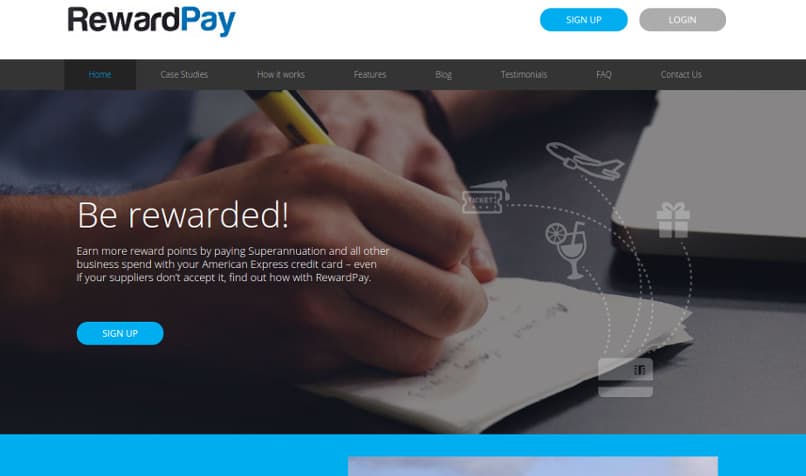
- B2B payment aggregators like RewardPay, Payment Logic and Zenith Payments, where businesses can use their credit cards to pay suppliers that don’t accept credit facilities or do so with a high surcharge. This helps our targeted clients earn significant reward points and to maximise their cash flow.
- Overseas supplier payment companies like Octet Finance, which manage foreign exchange payments and import paperwork via credit card, once again helping our clients earn substantial points and to optimise cash flow.
Midstream partnerships
- Travel agents such as Flight Centre and Corporate Traveller, whose clients are not only committed travellers but have usable points, providing us with the opportunity to offer them a specialised service that cuts costs for both business and leisure purposes.
- Accounting firms, financial planners and tax agents, whose clients are other SMEs seeking to “do more with less” by increasing productivity from their expenditures and generally finding smarter ways to cut costs.
- Real estate agents and prestige car dealers, which are ideally placed to advise their clients on any opportunity to source a cheap luxury holiday through smarter use of points.
Downstream partnerships (it’s a two-way street)
- iFLYflat clients can be referred to the likes of Flight Centre for hotel and other travel bookings.
- Our clients need services such as those provided by hire car operator Richard Cowell Cars, which offers seamless transfer to airports.
- Travel insurers, as most of our clients want insurance.
As iFLYflat grows, my focus is on how we can use our unique expertise to partner with other organisations to make our current and potential clients’ travels more comfortable.
Partnerships are a great way to amplify our message and to help ensure everyone reaps rewards.
Find out more about iflyflat and how they can help you make the most of your reward points.





 Still have questions? Chat with us.